The appeal of building a business facility in an Extraterritorial Jurisdiction is undeniable. For developers and business owners, moving just beyond the official city limits offers a wealth of advantages. Land acquisition costs are typically much lower, you are often exempt from the highest tiers of municipal property taxes, and you frequently face far fewer zoning restrictions regarding the type of business you can operate or the aesthetic design of your facility. It presents a canvas of raw acreage where you can construct a sprawling warehouse, a manufacturing plant, or a corporate campus without being boxed in by the dense, heavily regulated urban core.
However, this freedom comes with a significant catch that catches many first-time developers off guard. When you purchase raw land outside of city limits, you are not just buying a space to put a building; you are taking on the responsibility of establishing an entire micro-municipality. There are no city water lines to tap into, no municipal sewer systems to connect to, no pre-paved access roads equipped with storm drains, and no city trash collection. You must build your own infrastructure from the ground up before you can even begin to think about the building itself.
Successfully navigating a build of this magnitude requires a paradigm shift in how you hire. You cannot simply rely on standard urban contractors who are used to plugging into existing city grids. You need a highly specialized roster of experts who understand the unique logistical, environmental, and regulatory challenges of raw land development. This comprehensive guide breaks down the essential phases of development in these specific zones and the specialized teams you must assemble to turn an untouched plot of land into a thriving, self-sufficient operational hub.
Clearing and Prepping Your Raw Land
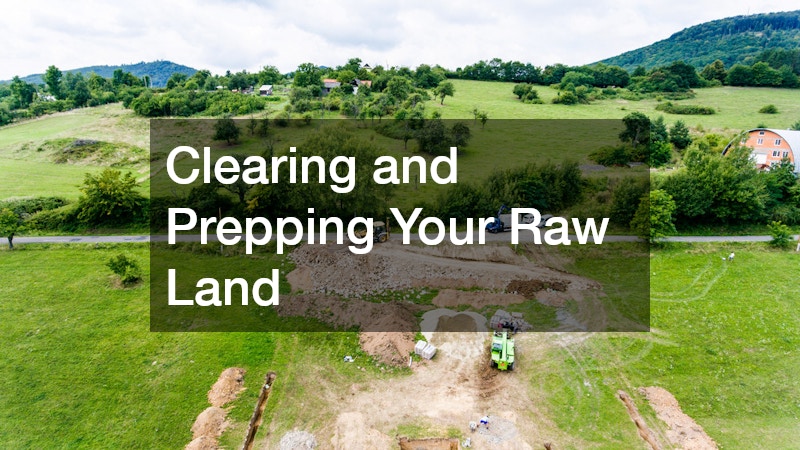
The most critical phase of any construction project happens before a single foundation form is set. In rural or semi-rural areas, raw land is exactly that—raw. It is untouched, untested, and often hides expensive secrets beneath the surface. Turning a pasture or a wooded lot into a viable, stable construction site requires extensive earthwork, deep environmental testing, and meticulous site management.
Assess Topography and Soil Composition Before Breaking Ground
Never assume that a flat piece of land is ready to build on. In areas outside city jurisdictions, the soil composition can vary wildly from one acre to the next. You might encounter expansive clay that swells and shrinks with the rain, destroying foundations, or you might hit solid limestone bedrock just two feet below the topsoil, turning a simple trenching job into a massive, costly blasting operation.
Before finalizing your building footprint—and ideally, during your land-purchasing due diligence phase—you need to bring in professionals to conduct rigorous geotechnical testing and topographical surveys. Core samples must be taken at multiple depths to determine the load-bearing capacity of the earth. Based on these reports, the land will likely need to be aggressively graded, cut, and filled to create a level, stable pad.
This is where hiring the right experts becomes crucial. You need heavy-duty earthmovers who understand the science of soil compaction and water runoff. Bringing in specialized excavating companies early in the process helps identify these hidden costs before you close on the property. They will assess the natural watershed, establish necessary drainage swales, and ensure that when it rains, water flows safely away from your future foundation rather than pooling beneath it.
Essential Pre-Construction Site Prep Checklist:
-
Geotechnical Soil Testing: Mandate deep core drilling to analyze soil strata, plasticity, and load-bearing strength.
-
Topographical Mapping: Utilize drone surveys and laser leveling to map out natural elevations and plan for necessary cut-and-fill operations.
-
Erosion Control Planning: Install silt fences and hydroseed disturbed earth to comply with county environmental regulations and prevent topsoil loss during heavy rains.
-
Access Road Stabilization: Create temporary, crushed-rock access roads so heavy machinery does not get bogged down in mud during the early stages of the build.
Establish a Strict Waste Management Protocol for Remote Sites
One of the most overlooked aspects of building outside the city limits is waste management. In a standard urban build, the municipality dictates waste protocols, and city streets provide easy access for regular sanitation trucks. On a raw parcel of land, you are entirely on your own.
A large-scale construction site generates an astonishing volume of debris. In the early phases, this includes cleared brush, tree stumps, and rocks. As construction begins, it shifts to massive quantities of concrete washout, scrap wood, metal cutoffs, drywall fragments, and voluminous packaging materials from shipped equipment. If this waste is not strictly managed, it creates immediate safety hazards for your crew, slows down the construction timeline by blocking site access, and can result in severe fines from county environmental inspectors for illegal dumping or watershed contamination.
To manage this, you must calculate your projected debris volume before the first crew arrives and establish a dedicated waste zone. Securing a commercial roll off dumpster is a mandatory first step. However, you cannot simply place it anywhere. The drop zone must be strategically located—close enough to the central work area for efficiency, but far enough away from temporary access roads so that the massive trucks swapping out the bins do not block material deliveries. Furthermore, you must prepare a stabilized gravel pad for these bins; otherwise, the immense weight of a fully loaded bin will cause the delivery truck to sink into the soft dirt, halting your site operations completely.
Establishing Independent Water Infrastructure
Perhaps the most daunting reality of building outside of a municipal grid is the absence of city water. You cannot simply pay a tap fee and run a pipe to the street. Your facility must become completely self-reliant for its water supply, which involves tapping into underground aquifers, treating the water, and ensuring you have enough pressure and volume to sustain both daily business operations and emergency fire suppression systems.
Test Aquifer Yield and Quality Early in the Design Phase
Your entire project hinges on the availability of groundwater. Before you finalize architectural plans for expansive employee restrooms, industrial kitchens, or manufacturing processes that require heavy water usage, you must prove that the land can actually support those demands.
The process begins with hydrogeological surveys and test drilling to locate a viable aquifer. You are not just looking for water; you are looking for specific flow rates, measured in gallons per minute (GPM). A well that produces 5 GPM might be fine for a small residential home, but it is entirely inadequate for a large corporate facility.
Navigating this process requires partnering with seasoned commercial well contractors who have a deep understanding of the local water table, historical aquifer depletion rates, and county drilling regulations. They will secure the necessary permits, manage the deep-drilling process, and case the shaft to prevent surface contamination. Once water is struck, they must perform rigorous drawdown tests to ensure the aquifer can sustain continuous, heavy pumping without running dry. Following the yield tests, extensive water quality testing is mandatory. Groundwater in remote areas is frequently laden with heavy minerals, iron, or sulfur, requiring the installation of industrial-grade filtration, softening, and reverse osmosis systems before the water is safe for human consumption or sensitive manufacturing equipment.
Water Discovery and Testing Protocols:
-
Historical Data Review: Analyze neighboring well logs submitted to the state to predict depth and yield before drilling begins.
-
Drawdown Testing: Pump the test hole continuously for 24 to 48 hours to measure how quickly the water level drops and recovers, determining the true sustainable yield.
-
Comprehensive Chemical Analysis: Test for E. coli, nitrates, lead, arsenic, hardness, and pH levels to design the appropriate filtration plant.
Design for Peak Demand and Fire Suppression Requirements
Finding water is only the first half of the equation; delivering it at a consistent, high pressure throughout a massive facility is the second. Municipalities use massive, elevated water towers to utilize gravity for constant water pressure. On your remote site, you must engineer a system that replicates this reliability mechanically.
Furthermore, county fire codes are exceptionally strict when it comes to remote commercial builds. Because there are no municipal fire hydrants on the street, the county fire marshal will likely require you to maintain hundreds of thousands of gallons of water on-site exclusively for fire suppression. If a fire breaks out, the sprinkler system must have instant, high-pressure access to this water reserve.
To solve both domestic demand and fire safety requirements, engineers must design a robust commercial pumping system tailored to the facility’s exact footprint. This setup goes far beyond a simple submersible pump. It requires massive above-ground or buried holding tanks to store water drawn slowly from the well. From these holding tanks, powerful booster pumps, regulated by variable frequency drives, push the water into the facility. These drives ensure that whether one person washes their hands or fifty toilets are flushed simultaneously during a shift change, the water pressure remains perfectly constant. Crucially, this entire infrastructure must be tied into an automatic backup generator to ensure that a rural power outage does not leave your facility without running water or fire protection.
Structural Framework and Local Compliance
Once the site is prepped and the underground utilities are established, the building begins to rise. Constructing the framework of a large facility in a wide-open, unshielded environment presents unique engineering challenges. Simultaneously, the regulatory landscape shifts from earth and water permits to structural safety and building codes, requiring a delicate dance with local county authorities.
Optimize Structural Integrity with Custom Steel Solutions
Buildings situated outside of dense urban environments lack the windbreaks provided by surrounding skyscrapers and subdivisions. A large facility sitting alone on a multi-acre plot is subjected to severe wind shear, intense directional storms, and prolonged exposure to the elements. Wood framing is rarely sufficient, and traditional concrete block construction can be prohibitively slow and expensive when transporting crews and materials to a remote site daily.
For maximum durability, longevity, and clear-span interior spaces (which are essential for warehouses, manufacturing floors, and large retail spaces), steel is the undisputed material of choice. The goal is to minimize the amount of raw fabrication happening out in the elements.
To achieve this efficiency, developers rely heavily on commercial metal fabrication services to engineer and build the structural components off-site in a controlled factory environment. By pre-fabricating the I-beams, trusses, and rigid frames, the components can be shipped to the site ready for immediate assembly. This “bolt-together” approach drastically reduces the amount of welding and cutting required on-site. It accelerates the construction timeline significantly, reduces the risk of weather-related delays, and ensures precision engineering that can withstand the specific wind-load and snow-load requirements of the open rural landscape.
Benefits of Off-Site Steel Pre-Fabrication:
-
Accelerated Timelines: Site prep and structural fabrication happen simultaneously; once the concrete foundation cures, the steel framework goes up in a fraction of the time.
-
Quality Control: Factory-controlled welding and cutting eliminate imperfections caused by bad weather or poor field conditions.
-
Cost Predictability: Fixed-price fabrication contracts protect your budget from the fluctuating labor costs associated with extended on-site delays.
-
Architectural Flexibility: Steel allows for massive, column-free interior spans, maximizing usable square footage.
Vet Partners for County-Specific Code Familiarity
One of the most complex aspects of building in these boundary zones is the regulatory gray area. While you are technically outside the city, the city may still exert certain subdivision controls or exterior lighting ordinances. Meanwhile, the county holds jurisdiction over septic systems, driveways connecting to county roads, and overall fire safety.
A standard city contractor will often assume that urban building codes apply, leading to blueprints that either over-engineer unnecessary municipal features or completely ignore strict rural environmental standards. You cannot afford to have your project halted by a county commissioner or an environmental inspector because your team filed the wrong paperwork with the wrong entity.
You must intentionally hire etj commercial companies that possess a deep, proven history of building specifically in these jurisdictional borderlands. These specialized vendors know exactly which permits go to the city planning desk and which go to the county judge. They already have established relationships with the local fire marshal and understand the unwritten preferences of the county environmental health department regarding on-site sewage facilities (OSSF). Vetting your partners for this highly specific local knowledge will save you months of bureaucratic delays and tens of thousands of dollars in redesign fees.
Weatherproofing and Site Accessibility
With the framework up and the inspectors satisfied, the focus shifts to the exterior. In a remote location, your facility must be an impenetrable fortress against the weather, and your site must be designed to handle the heavy logistical traffic that keeps your business running.
Grade Parking Lots for Heavy-Duty Traffic and Drainage
In a city, the municipality provides heavy-duty streets designed for freight traffic, complete with complex storm drain networks. When you build on raw land, you are responsible for designing and paving every inch of asphalt from the state highway to your loading docks.
Rural properties frequently feature softer soils, and a standard parking lot design will not survive the continuous pounding of 18-wheelers, delivery box trucks, and employee vehicles. If the sub-base is not engineered correctly, the asphalt will quickly develop deep ruts, massive potholes, and “alligator cracking” within the first year of operation. Furthermore, without city storm drains, a massive paved surface acts as a giant slip-and-slide for rainwater, threatening to flood your building or wash out adjacent county roads.
To prevent these disasters, developers must collaborate with specialized commercial asphalt companies long before the gravel is poured. These experts will engineer a site-specific pavement profile, often requiring feet—not inches—of compacted crushed stone as a sub-base in the heavy-duty loading zones. They will meticulously grade the entire parking area using laser technology to ensure water flows precisely toward custom-built retention ponds or bioswales. These water management features hold the runoff during a torrential downpour, allowing it to slowly absorb back into the water table rather than causing flash floods on your property.
Crucial Asphalt and Drainage Considerations:
-
Variable Pavement Thickness: Designating specific “heavy duty” zones for freight traffic with thicker asphalt and deeper bases, while saving money with standard thickness in employee parking areas.
-
Retention Pond Sizing: Calculating the exact square footage of the paved surface to ensure the retention pond is legally compliant with county watershed regulations.
-
Edge Milling and Curbs: Installing extruded concrete curbs around the perimeter of the asphalt to prevent edge deterioration and guide water flow effectively.
Select Materials Designed for High Wind and Sun Exposure
The “envelope” of your building—the roof and exterior walls—takes a massive beating in an open environment. Without the shade and wind-baffling effects of a surrounding city, your roof will bake under unobstructed UV rays and face the full, unmitigated force of straight-line winds and thunderstorms.
Selecting the right roofing system is paramount to the long-term operational cost of your facility. A cheap roof will not only leak but will also cause your energy bills to skyrocket as it absorbs the summer heat and transfers it directly into your workspace.
Developers must consult with specialized commercial roofers to select materials explicitly rated for high exposure. For flat or low-slope buildings, Thermoplastic Polyolefin (TPO) membranes are highly recommended. These bright white, single-ply membranes are highly reflective, bouncing UV rays away from the building and significantly reducing cooling costs. For pitched structures, heavy-gauge standing seam metal roofs are ideal. Unlike standard shingles, standing seam panels interlock securely, offering superior resistance to the wind uplift forces that plague open rural sites. Regardless of the material chosen, it is vital to secure comprehensive warranties that specifically cover wind damage at the highest possible speeds recorded in your region.
Climate Control and Operational Launch
The exterior is sealed, the parking lot is striped, and the building is finally watertight. The final phases involve making the interior habitable, efficient, and ready for business, culminating in the monumental task of relocating your existing operations to this new, remote headquarters.
Zone Your Building for Maximum Energy Efficiency
Operating a large facility outside the city limits often means dealing with rural electric cooperatives rather than massive municipal utility companies. While the service is generally reliable, the pricing structures, peak demand charges, and energy grids can differ. Because your building is fully exposed to the elements, your heating and cooling systems will work incredibly hard. If they are not designed intelligently, your monthly utility bills will severely cut into the financial benefits of moving to an ETJ in the first place.
A one-size-fits-all approach to climate control is a costly mistake. A massive warehouse with 30-foot ceilings has vastly different thermal requirements than a densely packed front office full of computers and personnel.
It is imperative to work with forward-thinking HVAC companies to design a deeply segmented, multi-zone climate strategy. The system should utilize smart thermostats connected to a central building management system, allowing facility managers to program distinct temperature schedules for different areas. Furthermore, incorporating rooftop units equipped with economizers is a brilliant strategy for rural builds. Economizers detect when the outside air is cool and dry enough to be used for “free cooling,” drawing in fresh air rather than running the energy-intensive mechanical compressors. This is particularly effective in open areas where nighttime temperatures drop significantly, saving thousands of dollars in cooling costs over the lifespan of the equipment.
Energy Efficiency Strategies for Remote Facilities:
-
Destratification Fans: Installing massive, low-speed ceiling fans in warehouse spaces to push rising hot air back down to the floor during winter, saving on heating costs.
-
Programmable Zoning: Separating server rooms, administrative offices, and manufacturing floors into distinct thermal zones so you aren’t paying to cool empty space.
-
Duct Sealing and Insulation: Mandating rigorous pressure testing on all exposed ductwork to ensure no conditioned air is leaking into the rafters.
Coordinate Equipment Logistics Months Before Handover
The building may be finished, but the project is not complete until your business is successfully operating inside it. Moving a company—especially one with heavy machinery, sensitive IT infrastructure, or massive inventory—from an urban center to a remote facility is a logistical tightrope walk. You cannot afford to have your operations shut down for weeks because trucks got lost on county roads or equipment was damaged in transit.
This phase cannot be treated as a last-minute afterthought. The transition requires military-level precision and planning that must begin well before the final coat of paint dries.
You must lock in a comprehensive contract for corporate moving at least 90 to 120 days prior to your estimated certificate of occupancy. These specialists do far more than just load boxes; they act as logistical project managers. They will physically map out the route from your old location to the new raw-land site, specifically looking for logistical nightmares like low-hanging branches on country roads, tight turns that cannot accommodate a 53-foot trailer, or older rural bridges with strict weight limits. They will work with your facility managers to plan a phased, sequential move-in—ensuring the IT infrastructure and heavy manufacturing equipment are placed and calibrated before the administrative staff and general inventory arrive, thereby minimizing your overall business downtime.
Conclusion
Developing commercial real estate just outside of municipal boundaries represents one of the most lucrative and liberating opportunities for a growing business. It offers the space to expand, the freedom to design without excessive urban constraints, and a highly favorable long-term tax environment. However, as outlined, it fundamentally shifts the burden of establishing civilization—water, waste, roads, and structural resilience—entirely onto the shoulders of the developer.
The success or failure of such a massive undertaking does not merely rely on the size of the budget, but entirely on the specific expertise of the team assembled to execute the vision. Relying on standard urban contractors who expect municipal conveniences will inevitably lead to stalled permits, budget overruns, and logistical nightmares. Conversely, partnering with specialists who understand the deep complexities of raw land, independent utilities, and the nuanced dance of county regulations will streamline the entire process. By vetting the right professionals early and planning for the unique challenges of rural-adjacent development, you ensure that your new facility will not only be built efficiently but will stand as a self-sufficient, high-performing operational hub for decades to come.